
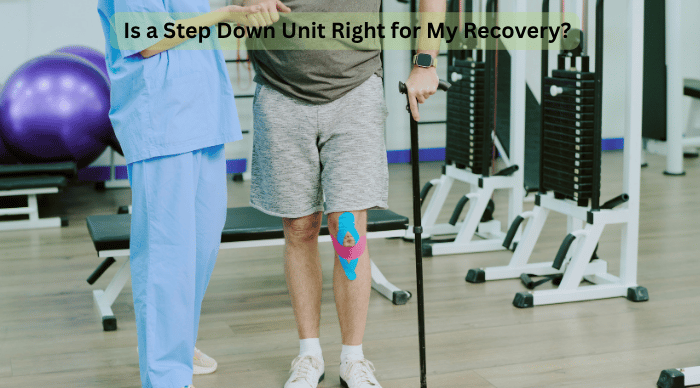
Few decisions in a hospital create as many mixed emotions as leaving the Intensive Care Unit (ICU).
For some patients, it feels like a victory.
For others, it feels terrifying.
I have spoken to countless patients and families who quietly wondered whether they were being moved too soon, whether they were still sick enough to need intensive care, or whether they would be safe outside the ICU.
If you’ve ever asked yourself, “Is a Step Down Unit right for my recovery?”, you’re asking exactly the right question.
Throughout my experience, I have learned one lesson that changes how people see this transition. Contact Greentree Sub Acute Hospital for all your step down needs
The ICU saves your life, but the Step Down Unit gives it back to you.
A Step Down Unit is not simply the next place in the hospital. It is a carefully chosen stage of recovery where patients receive exactly the level of care they need while beginning the difficult but rewarding journey back toward independence.
What Is a Step Down Unit Designed For?
A Step Down Unit (SDU), sometimes called an Intermediate Care Unit or High Care Unit, is designed for patients who have moved beyond the immediate danger of critical illness but still require advanced monitoring and specialised care.
These patients often:
- No longer need a ventilator.
- Have stable blood pressure.
- Require close nursing supervision.
- Still need continuous heart monitoring.
- Need complex medications or rehabilitation.
The goal isn’t simply to watch patients.
The goal is to help them safely transition from surviving to recovering.
Read our latest blog: Am I Ready to Leave the ICU? Signs You’re Moving to Step Down
Why Robert Was the Perfect Step Down Unit Patient
One patient who perfectly illustrates this was Robert, a 64-year-old high school teacher who underwent emergency triple-bypass heart surgery.
The Crisis That Changed Everything
Robert suffered a massive heart attack at home.
He required emergency open-heart surgery followed by three days in the ICU on a mechanical ventilator.
By the fourth day, he had reached an important milestone.
His breathing tube had been removed.
His heart had stabilised.
His life was no longer hanging in the balance.
But he wasn’t ready for a standard hospital ward.
Why He Couldn’t Go Straight to a General Ward
Although Robert had improved significantly, he remained medically fragile.
He still faced:
- A high risk of dangerous heart rhythm disturbances.
- The need for carefully managed intravenous heart medications.
- A requirement for continuous cardiac monitoring.
- A need for intensive rehabilitation after major surgery.
A general medical ward simply couldn’t provide the level of monitoring he still required.
Keeping him in the ICU, however, would have delayed his rehabilitation and occupied a bed that another critically ill patient might urgently need.
The Step Down Unit provided the perfect middle ground.
The Right Care at the Right Time
In the Step Down Unit, Robert received:
- A low nurse-to-patient ratio.
- Continuous wireless heart monitoring.
- Careful transition from IV heart medications to oral tablets.
- Respiratory therapy to strengthen his lungs.
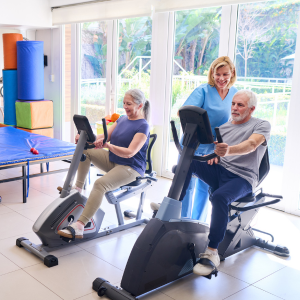
- Daily physiotherapy focused on rebuilding strength.
Each day represented another step forward.
- Day 1: He sat on the edge of the bed and stood for 30 seconds.
- Day 2: He walked to a bedside chair.
- Day 3: His chest drains were removed, and he walked along the corridor with a walker.
- Day 4: His heart rhythm remained stable, and he was discharged to a cardiac rehabilitation facility.
For Robert, the Step Down Unit wasn’t simply another room.
It was exactly the environment his body needed.
Who Is Not a Good Candidate for a Step Down Unit?
One misconception I often hear is that every recovering patient should go to a Step Down Unit.
That simply isn’t true.
The Step Down Unit is designed for a very specific stage of recovery.
Patients are either:
- Too sick for the Step Down Unit.
- Perfectly suited for the Step Down Unit.
- Too well to require the Step Down Unit.
Patients Who Still Need the ICU
Some patients remain too unstable to leave intensive care.
These patients often require:
- Mechanical ventilation.
- Continuous dialysis.
- High-dose blood pressure medications.
- Advanced invasive monitoring.
- One-to-one nursing care.
These treatments simply cannot be safely provided outside the ICU.
Patients Who Can Skip the Step Down Unit
Other patients recover quickly enough that they no longer require intermediate care.
These patients generally:
- Have stable vital signs.
- Take oral medications only.
- Require routine nursing care.
- Need predictable rehabilitation.
Sending these patients to a Step Down Unit would unnecessarily occupy specialised beds.
The Goal Is Always the Lowest Safe Level of Care
One of the biggest lessons I have learned is this:
The goal of a modern hospital is to place every patient in the lowest, safest level of care possible.
This allows patients to recover with greater independence while ensuring ICU resources remain available for those whose lives depend on them.
When Fear Makes Patients Doubt the Transition
One patient I’ll never forget was Sarah.
Sarah was a 42-year-old mother who spent ten days in the ICU battling severe bilateral pneumonia.
When the medical team told her she was ready for the Step Down Unit, she didn’t celebrate.
She panicked.
Why Sarah Didn’t Want to Leave
Sarah had become emotionally attached to the ICU.
She trusted:
- The constant alarms.
- The dedicated nurse.
- The continuous activity.
- The feeling that someone was always watching.
She worried:
- No one would notice if she stopped breathing.
- Her nurse would be too busy.
- She was still far too weak to recover.
Her fears were completely understandable.
The Moment Everything Changed
During her first day in the Step Down Unit, her nurse took time to explain something important.
She showed Sarah the portable telemetry monitor around her neck.
She pointed toward the monitoring screen at the nursing station.
She explained:
“We can still see your heart and oxygen levels every second. You’re not being watched less. You’re simply being watched differently.”
That reassurance made all the difference.
For the first time in nearly two weeks, Sarah slept peacefully.
The frantic ICU alarms had disappeared.
The room was quiet.
She rested for four uninterrupted hours.

The Day She Became a Person Again
Three days later, her physiotherapist encouraged her to stand.
Sarah was terrified.
She believed her legs would collapse.
Instead of pushing her too far, the therapist helped her stand and transfer safely into a chair beside the window.
She remained there for thirty minutes.
She looked outside.
She reached for her own cup of water.
Her hands trembled.
But she drank independently.
She looked at her nurse and quietly said:
“In the ICU, I felt like a sick patient. Sitting here, I feel like a person again.”
That sentence perfectly captures why the Step Down Unit exists.
Signs You May Be More Ready Than You Think
Experienced clinicians often recognise recovery long before patients believe they’re ready.
These subtle changes often tell us someone will thrive in a Step Down Unit.
1. Curiosity Replaces Passive Acceptance
Patients begin asking questions.
- What medication is this?
- Why are they removing this tube?
- When can I start walking?
Curiosity shows the brain is beginning to think beyond simple survival.
Families sometimes mistake this for anxiety.
In reality, it often signals growing independence.
2. Small Physical Activities Become Sustainable
Patients tolerate simple activities like:
- Sitting in a chair.
- Brushing their teeth.
- Eating a meal.
- Watching television while upright.
These may seem insignificant.
To experienced clinicians, they demonstrate that the body is beginning to manage normal daily demands.
3. Resistance Becomes Cooperation
Early in recovery, patients often refuse therapy completely.
Later, something changes.
Instead of saying:
“No.”
They begin saying:
“Can we try after lunch?”
That subtle shift tells us confidence is returning.
4. Independence Happens Naturally
One of my favourite signs is when patients begin doing little things without thinking.
They:
- Reach for their water.
- Adjust their blanket.
- Straighten their pillow.
- Move themselves in bed.
These ordinary actions often represent extraordinary neurological and physical recovery.
The Biggest Lesson I Have Learned
If someone asked me whether a Step Down Unit is the right place for their recovery, I would answer with one simple thought.
The ICU saves your life, but the Step Down Unit gives it back to you.
The ICU provides extraordinary, life-saving support.
Machines breathe for you.
Medications stabilise you.
Highly specialised staff protect you every second.
But recovery cannot happen while your body depends entirely on artificial support.
The Step Down Unit gently removes that scaffolding.
It asks your lungs to breathe.
Your muscles to move.
Your mind to engage.
Your confidence to grow.
It is not a downgrade in care.
It is an upgrade in independence.
Yes, it often feels frightening.
Growth usually does.
But when your healthcare team recommends the Step Down Unit, they are not taking safety away from you.
They are giving your body permission to begin reclaiming itself.
Final Thoughts
Choosing the right level of care isn’t about receiving the most intensive treatment possible.
It is about receiving the treatment that best matches your body’s current needs.
The Step Down Unit exists because recovery is not a switch that suddenly turns on.
It is a bridge.
A bridge between crisis and confidence.
A bridge between machines and movement.
A bridge between survival and independence.
If your medical team recommends a Step Down Unit, try not to see it as leaving the safety of the ICU behind.
See it for what it truly represents.
It is one of the strongest signs that your body is no longer simply fighting to survive.
It is finally learning how to live again.