
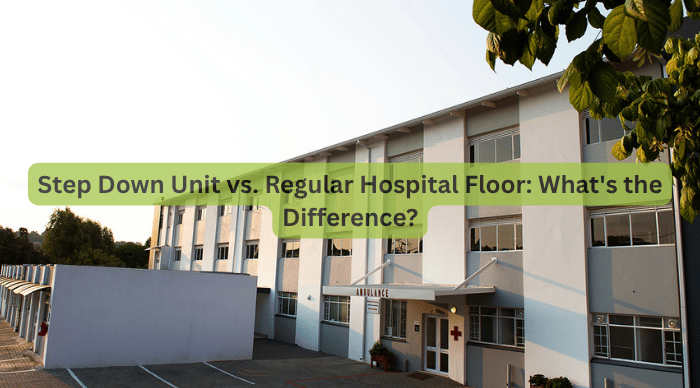
A regular hospital floor and a post-acute step-down unit serve two different purposes.
A hospital treats the immediate medical problem. A post-acute step-down facility helps the patient recover enough strength, mobility, confidence, and independence to return home safely.
This distinction matters because being medically stable does not always mean someone is ready to manage at home. A patient may no longer need emergency tests, surgery, or intensive medical intervention, but they may still be unable to walk, dress, eat safely, use the bathroom, or move from a bed into a chair without help.
That is where a facility such as GreenTree Sub-Acute & Rehabilitation Hospital fits into the care journey. GreenTree provides a structured transition between acute hospital care and home. Come chat to GreenTree Health for all your stroke rehabilitation, post operative surgery and hip replacement rehab
What Is a Regular Hospital Floor?
A regular hospital floor, also called an acute hospital ward, is designed to diagnose, treat, and stabilise medical conditions.
Patients on these wards may require blood tests, scans, medication changes, wound treatment, specialist consultations, oxygen support, intravenous medication, or monitoring following an operation or medical emergency.
The main objective is medical stability. Doctors and nurses focus on controlling the illness or injury, preventing immediate complications, and deciding when the patient no longer requires acute hospital treatment.
A regular hospital floor is therefore the right environment when a patient:
- Still requires active medical investigation
- Needs frequent intervention from specialists
- Has unstable vital signs
- Requires urgent access to scans or an operating theatre
- Needs intensive monitoring or rapid medication changes
- Is recovering from an acute infection, operation, stroke, or other serious event
Once the patient is stable, however, the goals of care begin to change. The next question is no longer only, “Is this patient medically safe?” It becomes, “Can this patient function safely outside the hospital?”
Read our latest blog post: How Often Will Nurses Check on Me in Step Down?
What Is a Post-Acute Step-Down Unit?
In this article, a step-down unit refers to a standalone post-acute and sub-acute facility such as GreenTree. It does not refer to a high-care unit situated between an ICU and a general hospital ward.
A post-acute step-down facility admits patients after they have been discharged from an acute hospital. These patients are medically stable, but they are not yet physically or functionally ready to return home.
GreenTree acts as a bridge between hospital and home. The focus shifts away from emergency intervention and towards active recovery.
Depending on the patient’s condition, this may include:
- Physiotherapy
- Occupational therapy
- Speech and swallowing therapy
- Rehabilitative nursing
- Wound management
- Medication management
- Nutritional support
- Mobility and transfer training
- Family and caregiver education
- Discharge planning
The aim is not simply to keep the patient comfortable while time passes. Every part of the day should move the patient closer to a safe and realistic return home.
The Main Difference Is the Goal of Care
The clearest difference between a regular hospital floor and a post-acute step-down unit is the primary goal.
On an acute hospital floor, the goal is to treat and stabilise the medical condition. In a post-acute facility, the goal is to restore function and independence.
For example, an acute hospital may successfully treat a patient following a stroke. The patient’s brain swelling may be controlled, vital signs may be stable, and no further emergency intervention may be required. From a medical perspective, the patient may be ready for discharge.
Functionally, however, that same patient may still be unable to stand, walk, swallow safely, communicate clearly, or complete basic personal care.
Sending that person directly home could place both the patient and the family under enormous pressure. Keeping the patient on an acute hospital floor purely for physical recovery may also be inappropriate because the ward is not designed to provide intensive, coordinated rehabilitation throughout the day.
A step-down facility fills this gap.
How a Typical Day at GreenTree Differs From a Hospital Ward
A day on a regular hospital floor often revolves around medication rounds, observations, tests, doctor visits, and waiting. Patients spend much of their time in bed because the priority is treating the acute medical problem.
At GreenTree, the day is more active, predictable, and structured. It is designed to help the patient return to a normal daily routine.
Nursing Support Encourages Independence
Rehabilitative nursing is different from simply doing every task for the patient.
GreenTree’s nursing team provides the support patients need while encouraging them to participate in their own care wherever it is safe to do so. A nurse may assist a patient with washing, dressing, moving, or transferring from a bed to a wheelchair, but the patient is encouraged to use their remaining abilities.
This approach takes patience, but it is essential. If every task is always completed for the patient, valuable opportunities to rebuild function are lost.
Therapy Becomes Part of the Daily Routine
On a regular hospital floor, a physiotherapist may assess whether a patient can stand or walk safely. The session may be brief because intensive rehabilitation is not the ward’s primary purpose.
At GreenTree, therapy is central to the patient’s day. Depending on the clinical plan and the patient’s stamina, they may participate in one to three hours of physical, occupational, or speech therapy.
Therapy may focus on:
- Sitting upright without support
- Standing and walking safely
- Improving balance and coordination
- Moving between a bed, chair, toilet, and shower
- Dressing and grooming independently
- Using mobility aids correctly
- Improving speech and communication
- Restoring safe swallowing
- Relearning household and everyday tasks
Doctors Provide Oversight and Coordination
Doctors in an acute hospital focus on diagnosis, stabilisation, investigations, and urgent medical treatment.
In a post-acute environment, the patient has already reached medical stability. Doctor involvement therefore centres on monitoring recovery, managing ongoing conditions, reviewing medication, and coordinating the broader care plan with nurses and therapists.
The patient still receives medical oversight, but the daily focus is no longer crisis management.
Meals Can Become Part of Rehabilitation
Meals are not only about nutrition. They can also help a patient practise sitting upright, using utensils, swallowing safely, interacting socially, and rebuilding a normal routine.
Where appropriate, patients are encouraged to get dressed and eat in a more communal environment. These ordinary activities can play an important role in helping someone feel like a recovering person rather than a permanently ill patient.
Rest Is Planned Around Rehabilitation
Rehabilitation is demanding, especially after a stroke, major operation, or extended hospital stay. Patients need protected rest between therapy sessions.
At GreenTree, rest periods can be planned around the rehabilitation programme. This balance helps patients participate meaningfully without becoming exhausted.
Who May Benefit From Post-Acute Step-Down Care?
GreenTree typically admits patients who have experienced a major health event and need coordinated support from nurses and rehabilitation professionals.
Suitable patients may include people recovering from:
- Strokes and other neurological conditions
- Hip or knee replacements
- Spinal procedures
- Major surgery
- Serious infections or prolonged hospitalisation
- Reduced mobility following illness or injury
- Complex wounds requiring continued management
- Swallowing or communication difficulties
- General weakness and loss of independence
The patient must have rehabilitation potential. This generally means that they are conscious, can follow at least simple instructions, and have enough physical stamina to participate in an appropriate therapy programme.
When Is a Patient Ready to Leave the Acute Hospital?
A patient may be ready for post-acute care when their vital signs are stable and the immediate medical crisis has passed.
Common signs include:
- Stable blood pressure, heart rate, and oxygen levels
- No need for ongoing emergency procedures
- No requirement for constant changes to life-sustaining medication
- Completion of urgent scans, surgery, or specialist investigations
- The ability to participate in rehabilitation
- A continued need for nursing, therapy, wound care, or mobility support
The treating doctor and hospital case manager should assess these factors before recommending a transfer.
When Would GreenTree Not Be the Right Choice?
A post-acute step-down facility is not a replacement for an ICU, emergency department, or acute hospital.
GreenTree may not be appropriate when a patient requires:
- Mechanical ventilation or intubation
- Continuous life-sustaining medication infusions
- Urgent and repeated CT or MRI scans
- Immediate access to an operating theatre
- Unstable medical management
- Treatment for an active medical crisis
Post-acute rehabilitation is also different from permanent frail care. A person with an irreversible, end-stage condition who requires indefinite nursing support may need a long-term care environment rather than a short-term restorative programme.



Why Going Directly Home Is Not Always Safe
Families often want to bring a loved one home as soon as possible. That instinct is understandable, but the decision must be based on the patient’s functional ability and the support available at home.
Before choosing direct discharge, ask practical questions:
- Can the patient get out of bed safely?
- Can they transfer to a chair or toilet?
- Can they walk safely, even with an assistive device?
- Can they swallow food, liquids, and medication without serious risk?
- Can they wash and dress themselves?
- Can they manage stairs at home?
- Does the family know how to assist without injuring themselves or the patient?
- Is suitable equipment already available?
- Can someone provide the required supervision throughout the day and night?
If the answer to several of these questions is no, returning home immediately may lead to falls, medication errors, caregiver exhaustion, aspiration, wound complications, or an avoidable hospital readmission.
David’s Recovery After a Severe Stroke
An anonymised patient story illustrates the difference that the correct care environment can make. We will call the patient David.
David was a 68-year-old man who experienced a severe ischaemic stroke. He spent 10 days in an acute hospital, including four days in the ICU while doctors stabilised brain swelling.
By the time he was referred to GreenTree, the immediate medical emergency had passed. He no longer required ICU care, but he was profoundly disabled.
David had complete paralysis on his right side, severe difficulty speaking, and swallowing problems. He was confined to bed and needed two nurses to help him roll or sit upright. He also depended on a nasogastric feeding tube for nutrition.
He was medically stable enough to leave the acute hospital, but he was nowhere near ready to return home safely.
David’s Interdisciplinary Rehabilitation Plan
David began a customised rehabilitation programme as soon as he arrived at GreenTree.
His physiotherapy initially focused on core stability and learning to sit upright without support. As he progressed, he started standing exercises and later practised walking between parallel bars in the rehabilitation gymnasium.
Occupational therapy helped him use his unaffected left hand for practical tasks such as brushing his teeth and washing. His therapist also worked on neurological stimulation and the functional recovery of his right arm.
Speech-language therapy addressed both communication and swallowing. David completed daily swallowing exercises so that he could gradually move away from tube feeding. He also worked on forming functional words and communicating his basic needs.
The nursing team reinforced these goals throughout the day. Instead of completing every movement for him, nurses coached David to use his remaining strength while transferring, dressing, and participating in personal care.
Why Staying on a Regular Ward Was Not the Answer
David no longer needed acute intervention. Remaining on a general hospital floor would not have provided the same structured hours of daily rehabilitation.
Extended inactivity could also have increased his risk of pressure injuries, muscle shortening, weakness, and further loss of function.
This does not mean the acute hospital had failed him. It had completed its primary task by stabilising his condition. David’s needs had simply changed.
Why an Immediate Return Home Was Unsafe
David’s wife could not lift him, manage his feeding tube, or assist him safely with every transfer. The home also lacked the staff, equipment, and coordinated therapies required at that stage of recovery.
A premature discharge could have resulted in a serious fall or aspiration pneumonia. It may also have placed an unrealistic physical and emotional burden on his wife.
David’s Condition at Discharge
David spent four weeks in GreenTree’s inpatient rehabilitation programme.
By discharge:
- His feeding tube had been removed
- He could safely manage an appropriate modified diet
- He had regained meaningful control of his right leg
- He could stand independently
- He could walk up to 30 metres using a quad cane
- He could communicate his basic needs
- He could transfer from a bed to a chair with minimal, non-physical supervision
His recovery was not complete, but he had reached the practical milestones needed to make returning home safer and more manageable.
How GreenTree Measures Progress Towards Discharge
In an acute hospital, discharge is largely determined by medical stability. An infection may have cleared, blood pressure may be controlled, or the surgical wound may no longer require acute intervention.
At GreenTree, discharge planning starts on the day of admission. Progress is assessed by the multidisciplinary team and linked to practical functional goals.
Depending on the patient, the team may measure whether they can:
- Sit safely without assistance
- Stand or walk with the correct mobility aid
- Transfer between a bed, chair, and toilet
- Complete basic washing and dressing tasks
- Swallow food, liquids, and medication safely
- Communicate essential needs
- Manage the physical layout of their home
- Follow a safe medication routine
- Complete daily tasks with an appropriate level of support
Discharge does not require perfection. It requires a safe plan that matches the patient’s ability, home environment, available equipment, and family support.
How Long Does a Patient Stay in a Step-Down Facility?
The length of stay is individualised. It depends on the patient’s condition, recovery potential, functional progress, treatment goals, and medical-aid approval.
A typical stay may last between two and four weeks, although some patients need a shorter or longer programme.
The multidisciplinary team reviews progress throughout the admission. If the patient continues to make measurable gains and requires additional inpatient care, the case manager may submit a clinical motivation to the medical scheme for an extension.
The important measure is not simply how many days the patient has spent in the facility. The team must consider what the patient can safely do and what still needs to improve before discharge.
How Referrals and Medical-Aid Authorisation Work
In South Africa, admission to a sub-acute facility generally requires a formal clinical referral and medical-aid pre-authorisation.
The process usually includes:
- The treating doctor or specialist at the acute hospital prepares a clinical referral.
- The hospital case manager and GreenTree admissions team exchange the necessary medical information.
- GreenTree’s case manager submits a clinical motivation to the patient’s medical scheme.
- The medical scheme reviews whether the patient meets its criteria for sub-acute care.
- Admission is arranged once authorisation and the relevant clinical acceptance have been confirmed.
Medical schemes differ, and approval is not automatic. Families should confirm the applicable benefits, authorisation conditions, approved duration, co-payments, and exclusions directly with the medical scheme and admissions team.
Questions Families Should Ask Before Making a Decision
Families should speak to the treating doctor and case manager before choosing between continued acute care, post-acute rehabilitation, and discharge home.
Ask these four questions:
- Is the patient medically stable? Find out whether the patient still needs daily diagnostic testing, emergency intervention, or active specialist treatment.
- Can the patient participate in rehabilitation? Ask whether they can manage one to two hours of appropriate physical, occupational, or speech therapy during the day.
- What must the patient be able to do before going home? Identify the actual functional requirements, including transfers, walking, toileting, swallowing, and managing stairs.
- Can the family provide the required care safely? Be honest about physical strength, medical knowledge, time, home accessibility, and round-the-clock availability.
These questions move the conversation away from assumptions and towards a safe, evidence-based discharge plan.
Practical Advice for a Smooth Transfer
Start the Process Early
Do not wait until the acute hospital announces that discharge must happen that day. Speak to the hospital case manager and GreenTree admissions team as early as possible, ideally at least 48 hours before the expected transfer.
Early planning gives the teams time to exchange medical information, assess suitability, request medical-aid authorisation, and prepare the correct care plan.
Participate in the Rehabilitation Process
Families should become active participants rather than remaining visitors on the sidelines.
Attend suitable therapy sessions and learn how to assist with transfers, mobility aids, personal care, communication, feeding, and home exercises. This preparation reduces uncertainty and helps prevent unsafe techniques after discharge.
Bring Comfortable, Normal Clothing
Pack loose-fitting everyday clothes and supportive, closed shoes if the clinical team considers them appropriate.
Getting dressed supports practical rehabilitation. It also helps the patient move psychologically from an acute “sick patient” routine towards a more normal pattern of daily life.
Prepare the Home Before Discharge
Ask the therapists whether the patient will need:
- A wheelchair or walking aid
- Grab rails
- A shower chair
- A raised toilet seat
- A hospital-style bed
- Ramps or changes to difficult entrances
- Furniture rearrangement to create clear walking routes
- Continued outpatient or home-based therapy
Do not leave these decisions until the morning of discharge.
Choosing the Right Next Step for Recovery
A regular hospital floor saves lives by diagnosing, treating, and stabilising acute medical problems. A post-acute step-down facility takes over when the immediate crisis has passed but the patient still needs structured nursing and rehabilitation before returning home.
One setting is not better than the other. Each has a specific role at a different stage of the patient’s care journey.
The key is recognising that medical stability and functional independence are not the same thing. A patient may be ready to leave an acute hospital without being ready to live safely at home.
GreenTree Sub-Acute & Rehabilitation Hospital helps close that gap. Through coordinated nursing, therapy, medical oversight, family training, and discharge planning, the team works towards a practical outcome: helping each patient regain as much safe independence as possible.