
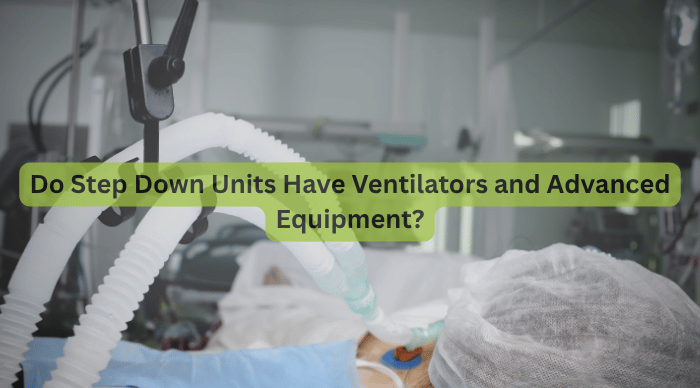
Some step-down units have advanced medical equipment, but the answer depends on the type of step-down unit.
An internal hospital step-down unit may offer continuous monitoring and advanced respiratory support for patients leaving the ICU. A standalone post-acute facility such as GreenTree Sub-Acute & Rehabilitation Hospital serves a different purpose.
GreenTree treats medically stable patients who no longer need intensive or acute hospital care but still require nursing, medical treatment, wound management, respiratory support, or rehabilitation before returning home.
GreenTree does not provide invasive mechanical ventilation or other forms of ICU-level life support. It can, however, manage selected stable patients who require appropriate supportive equipment.
There Are Two Types of Step-Down Units
The term “step-down unit” is often misunderstood because it can describe two different healthcare environments.
Internal Hospital Step-Down Units
An internal step-down or progressive-care unit is located inside an acute hospital. It treats patients who no longer need the ICU but still require closer observation than patients on a regular hospital floor.
Depending on the hospital, this unit may offer:
- Continuous cardiac monitoring
- Centralised telemetry
- High-flow oxygen
- CPAP or BiPAP
- Complex medication infusions
- Rapid access to scans, specialists, and emergency treatment
If a patient deteriorates, ICU staff and acute medical services are immediately available.
Read our latest blog post: Can I Have Visitors in a Step Down Unit?
Standalone Post-Acute Facilities
GreenTree is a standalone post-acute and rehabilitation hospital. Patients transfer to GreenTree after their immediate medical crisis has been treated and stabilised.
The focus is on continued recovery through nursing, therapy, wound care, mobility training, and preparation for discharge home.
A patient may still have complex needs, but those needs must be stable, predictable, and suitable for management outside an acute hospital.
Does GreenTree Have Mechanical Ventilators?
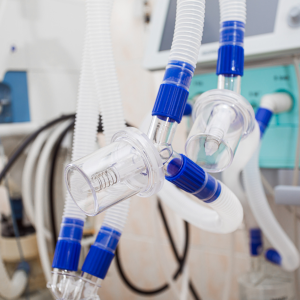
GreenTree does not provide invasive mechanical ventilation for patients who depend on an endotracheal tube and ICU-level life support.
Managing an invasive ventilator requires far more than owning the machine. It also requires continuous critical-care monitoring, specialised nursing, advanced airway expertise, rapid medical intervention, and immediate access to emergency services.
A patient who still requires invasive ventilation should remain in an ICU or move to a specialist facility equipped for long-term ventilator management.
This distinction is important. Supplemental oxygen and non-invasive breathing support are not the same as invasive mechanical ventilation.
Can GreenTree Manage CPAP or BiPAP?
GreenTree may manage prescribed CPAP or BiPAP for selected medically stable patients. These devices can support people with conditions such as obstructive sleep apnoea or stable respiratory needs following an acute hospital stay.
Before admission, the team must confirm:
- Why the device is needed
- Whether the patient uses CPAP or BiPAP
- The prescribed settings
- When and how often it is used
- Whether supplemental oxygen is required
- Which mask and consumables are needed
- Whether the patient can breathe independently
- Whether the condition has remained stable
A patient who needs frequent emergency adjustments or escalating respiratory support may not yet be ready for post-acute care.
What Respiratory Equipment Is Available?
GreenTree can provide appropriate respiratory support for suitable patients. Equipment may include:
- Wall-outlet oxygen
- Portable oxygen concentrators
- Nasal cannulas
- Oxygen masks
- Pulse oximeters
- Suction equipment
- Approved CPAP or BiPAP devices
Oxygen is a prescribed medical treatment. The flow rate and target oxygen saturation must be included in the clinical handover.
Family members must never adjust the oxygen flow, change CPAP or BiPAP settings, disconnect equipment, or silence an alarm. A nurse should be called if the patient appears uncomfortable, confused, unusually sleepy, or short of breath.
What Other Advanced Equipment Does GreenTree Use?
IV Infusion Pumps
Some patients leave an acute hospital before completing a course of intravenous antibiotics or another prescribed infusion.
IV pumps deliver medication at a controlled rate. Professional nurses programme the pump, monitor the IV site, observe the patient’s response, and investigate alarms.
GreenTree must receive clear instructions about the medication, dose, schedule, duration, and monitoring requirements before the transfer.
Wound VAC Systems
GreenTree provides routine and specialised wound care, including negative pressure wound therapy for suitable patients.
A wound VAC applies controlled suction to a sealed dressing. It may be used for selected surgical wounds, pressure injuries, or slow-healing wounds.
Trained nurses monitor the dressing, tubing, drainage, surrounding skin, and equipment alerts. Visitors must not disconnect the system or adjust its settings.
Patient Monitoring Equipment
GreenTree uses suitable equipment to monitor:
- Blood pressure
- Heart rate
- Oxygen saturation
- Respiratory rate
- Body temperature
This monitoring is appropriate for medically stable patients. It is not the same as centralised ICU telemetry or continuous invasive monitoring.
Rehabilitation Equipment
Advanced care is not limited to electronic medical devices. Rehabilitation equipment is central to helping patients regain independence.
Depending on the patient’s needs, this may include:
- Mechanical patient lifts
- Transfer boards and gait belts
- Wheelchairs and positioning supports
- Parallel bars
- Walking frames and rollators
- Hemi-walkers and quad canes
- Rehabilitation stairs
- Continuous passive motion machines
- Electrical muscle stimulation devices
- Splints and adapted utensils
How Does GreenTree Assess a Patient Before Admission?
Admission is not determined by a diagnosis or device alone. GreenTree completes a pre-admission assessment to establish whether the patient can be treated safely.
The team reviews:
- The reason for hospital admission
- Hospital and ICU summaries
- Recent operations or procedures
- Current medication and infusion needs
- Oxygen or respiratory settings
- Vital-sign stability
- Wound-care requirements
- Mobility and functional ability
- Capacity to participate in rehabilitation
The treating doctor, hospital case manager, and GreenTree admissions team must exchange accurate information. Missing details can delay admission or result in an inappropriate transfer.
When Should a Transfer Be Delayed?
A patient should remain in an acute hospital if they require:
- Invasive mechanical ventilation
- Management of a new or unstable tracheostomy
- Emergency surgery or urgent diagnostic testing
- Medication to maintain unstable blood pressure
- Invasive arterial or intracranial monitoring
- Frequent emergency respiratory intervention
- Constant specialist supervision
The transfer should also be delayed if important test results are outstanding or the treatment plan is still changing rapidly.
How Advanced Equipment Supports Rehabilitation
An anonymised case involving a patient we will call Mr. Khumalo shows how advanced equipment can be combined with rehabilitation.
Mr. Khumalo was 68 and had experienced a severe ischaemic stroke that caused paralysis on his left side. He also had a stage-three pressure injury and stable obstructive sleep apnoea.
When he arrived, he used supplemental oxygen, a wound VAC, an IV pump for antibiotics, and BiPAP at night.
He was stable enough to leave the acute hospital because he was conscious, his blood pressure and heart rate were steady, and he no longer needed emergency medication or invasive monitoring. His remaining treatments were planned and predictable.
GreenTree’s nurses managed his oxygen, IV medication, wound therapy, and overnight BiPAP. His rehabilitation initially consisted of lower-intensity bedside exercises.
As his condition improved, the IV treatment ended and the line was removed. His wound progressed enough for the team to replace the wound VAC with specialised dressings. He then participated in more active physiotherapy and occupational therapy.
This reflects the goal of post-acute care. Equipment provides necessary support, but dependence should reduce when the patient’s condition allows it.
Questions Families Should Ask Before Transfer
If your loved one still uses medical equipment, ask GreenTree:
- Can the facility manage this exact device and the patient’s current settings?
- Are trained nurses available on every shift?
- Who supplies the required masks, dressings, tubing, and other consumables?
- May the patient bring a personal CPAP or BiPAP machine?
- Must a personal device be inspected before use?
- Which electrical outlets remain powered during an outage?
- What emergency and backup-power systems are available?
- What happens if the patient’s condition deteriorates?
- Has medical-aid authorisation been confirmed?
- Are equipment and consumable costs included in the authorised tariff?
How to Prevent an Unsafe or Delayed Transfer
Do not move the patient until GreenTree has reviewed the clinical information, accepted the admission, and confirmed medical-aid authorisation.
Before transport:
- Confirm the receiving team has the latest medical records
- Provide the prescribed equipment settings
- Confirm who supplies specialised consumables
- Ensure the ambulance can support the patient’s oxygen or respiratory needs
- Send the prescribed medication and relevant instructions
- Confirm that personal devices have been approved for use
Never assume that every facility using the term “step-down” offers the same equipment. Ask about the exact device, the patient’s current dependency, and the staff required to manage it.
GreenTree provides advanced supportive care for medically stable patients, but it is not an ICU. The safest transfer happens when the patient’s needs match the facility’s capabilities and every clinical and logistical detail is confirmed in advance.