
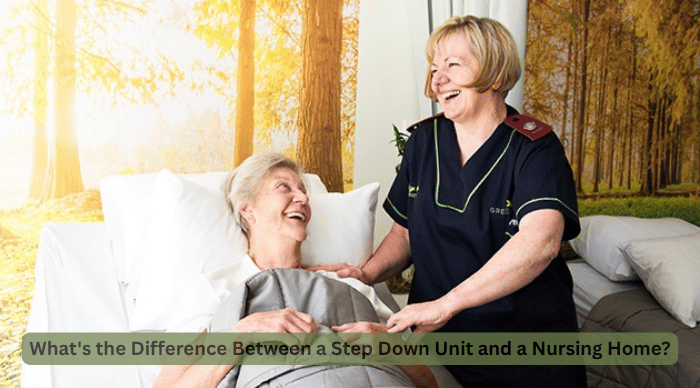
The main difference is the purpose of the admission. Step down care generally provides temporary medical support and rehabilitation after an illness, injury or operation. A nursing home generally provides ongoing accommodation, nursing and assistance for people who need longer-term support.
However, services can overlap. Some nursing homes offer short-term recovery care and rehabilitation, while some patients leaving step down care need continued residential support. The right choice depends on the person’s assessed needs and what the individual facility can provide.
At Greentree Sub Acute Hospital in Pretoria, our focus is on helping patients recover function and achieve their highest practical level of independence. Admission is a stage in recovery, rather than an automatic decision about permanent residence.
Does Step Down Care Mean My Loved One Is Never Going Home?
This is one of the most important misconceptions we address with families.
Hearing that someone needs 24-hour nursing outside an acute hospital can feel unsettling. Families may assume it means their loved one can no longer recover or return home.
A step down admission does not mean that. It can provide time, treatment and support for someone who no longer needs acute hospital care but cannot yet manage safely at home.
Returning home is a common goal, although it cannot be promised for every patient. The team reviews progress, ongoing care needs and available support to determine the most suitable next step.
What Is Step Down Care Designed to Do?
Step down care bridges the gap between acute hospital treatment and the next appropriate care setting. At Greentree, this includes subacute nursing and rehabilitation for suitable patients recovering from surgery, illness, injury or a medical event such as a stroke.
Depending on the patient’s needs, care may involve:
- Rehabilitation after orthopaedic surgery or joint replacement.
- Stroke rehabilitation.
- Support after a prolonged hospital or ICU stay.
- Post-operative nursing and wound care.
- Prescribed intravenous treatment.
- Help rebuilding mobility and daily living skills.
The treatment plan is individual. Not every patient requires the same therapies, clinical interventions or length of stay.
Read our latest blog: What Happens After Step Down—Where Do I Go Next?
Recovery Goals Are Practical
Rehabilitation goals often relate to ordinary activities that become difficult after illness or surgery. These may include standing from a chair, reaching the bathroom safely, getting dressed or managing steps.
For another patient, the immediate goal may be completing prescribed treatment or establishing a manageable wound care plan.
The important question is what the admission is intended to achieve and how the team will review that progress.
What Is a Nursing Home Designed to Do?
A nursing home generally provides a residential environment for people who need ongoing nursing, supervision or assistance with daily life.
Residents may need help with personal hygiene, dressing, eating, medication routines or mobility. Some need substantial support because of physical disability, cognitive difficulties or several long-term conditions.
Good long-term care also supports dignity, comfort, meaningful activity and the abilities a person retains. It should not be understood as simply keeping someone in bed or abandoning opportunities for improvement.
Can a Nursing Home Also Provide Rehabilitation?
Yes. Some nursing homes offer physiotherapy, rehabilitation services, respite admissions or short-term recovery stays.
The term “nursing home” does not tell you how frequently therapy is available, which professionals provide it or whether the facility can manage a particular medical need.
Ask about the actual service rather than relying on the facility’s name or brochure.
How Do the Expected Lengths of Stay Differ?
A step down admission is usually temporary, with discharge planning linked to the patient’s clinical needs, progress and next care arrangement.
A nursing home admission may last months or years, although some facilities also accept temporary residents.
Neither setting should be chosen on the assumption that a fixed number of days suits everyone. Ask for an estimated timeframe, the reasons behind it and how it will be reviewed.
Discharge Does Not Always Mean Complete Recovery
A patient may leave step down care while still needing therapy, equipment or assistance. The next stage might be home with support, further rehabilitation or a suitable residential facility.
Moving to another setting does not necessarily mean rehabilitation has failed. It may reflect the level of support needed for continued recovery or daily life.
How Does the Team Decide Which Setting Is Appropriate?
The decision should consider medical stability, previous function, current abilities, treatment goals and available support.
At Greentree, the relevant multidisciplinary professionals assess the patient and discuss the care plan with the patient and family.
What Could the Person Do Before the Illness or Injury?
Understanding the person’s previous abilities helps establish realistic goals. Someone who was living independently before a fracture may need temporary rehabilitation to recover mobility.
Someone who already required extensive assistance may need rehabilitation alongside planning for continued daily support.
Previous dependence does not make treatment pointless. Goals may include reducing pain, improving transfers, maintaining movement or making care safer and more comfortable.
What Treatment Can the Patient Benefit From?
Rehabilitation suitability is not determined by age or diagnosis alone. Cognitive impairment, including dementia, does not automatically rule out benefit from appropriately adapted rehabilitation.
The team considers the person’s condition, ability to engage, tolerance, preferences and achievable goals. Therapy may need shorter sessions, repetition, different communication methods or caregiver involvement.
Families should not assume that every subacute patient must complete a fixed number of therapy hours each day. Treatment intensity should match clinical needs and tolerance.
What Support Will Be Needed Afterwards?
A patient may make useful progress yet still need help at home. The team considers whether family members, caregivers or nursing services can realistically meet those needs.
If that support cannot be arranged, another care setting may be more appropriate.

A Hypothetical Example: Two Patients After a Hip Fracture
Imagine two older adults who have both undergone surgery for a hip fracture.
Before the fall, Patient A lived independently. She now needs help standing and walking, but the team identifies achievable goals that could support a return home. A temporary step down admission may provide suitable nursing and rehabilitation.
Patient B already needed considerable assistance before the fracture and has advanced dementia. His assessment must still consider pain control, mobility, adapted rehabilitation and the support available.
He may need a long-term care setting that can meet his ongoing needs while continuing appropriate therapy. Alternatively, a period of subacute care may be suitable before that transition.
This is a hypothetical comparison, not a report of specific Greentree patients. It shows why the same operation does not automatically lead to the same care recommendation.
What Differences Should Families Check in Staffing and Medical Support?
A facility’s ability to meet your loved one’s needs matters more than a general assumption about its category.
Do not assume that every step down facility has more nurses than every nursing home, or that every nursing home provides the same clinical support. Ask each provider for relevant information.
Nursing and Caregiver Support
Ask which nursing professionals and caregivers are available during the day and overnight, and how assistance is provided when several patients need help.
Explain the person’s actual needs, including whether transfers require two people, whether overnight supervision is necessary and whether specialised clinical tasks are involved.
Access to Doctors
Greentree has a GP on call and maintains communication with referring doctors. This is different from having a specialist continuously present at the bedside.
For any facility, ask how routine medical reviews, unexpected changes and emergencies are handled.
Therapy Availability
At Greentree, physiotherapy is available, with other professional services arranged according to the patient’s needs.
When comparing facilities, confirm:
- Which therapy disciplines are available.
- Who assesses the patient and sets goals.
- How session frequency is determined.
- How progress is reviewed.
- Whether practitioners bill separately.
- How ongoing therapy is arranged after discharge.
A promise of “rehabilitation” needs these practical details to become meaningful.
Equipment and Specialised Treatment
Tell the admissions team about prescribed treatments, wounds, medical devices and monitoring requirements before agreeing to transfer.
Ask the facility to confirm that it can manage those specific needs. The presence of hospital beds or oxygen equipment alone does not establish suitability.
Greentree is a subacute and rehabilitation hospital, rather than an ICU. Patients requiring acute life support or monitoring beyond its scope need an appropriately equipped acute hospital.
How Do Costs and Medical Aid Funding Differ?
A temporary subacute admission and long-term residential care can have different funding arrangements. However, neither facility admission nor an authorisation number guarantees that every expense will be paid.
Funding for Step Down Care
Medical schemes may fund eligible subacute care subject to clinical authorisation, plan rules, available benefits and applicable tariffs.
At Greentree, the admission process includes assessment and liaison with the medical scheme for authorisation where relevant.
Confirm approved dates, covered services, co-payments and possible tariff shortfalls. Therapy and other professional accounts may require separate arrangements.
Funding for Nursing Home Care
Long-term accommodation and daily living assistance are commonly privately funded. However, individual medical treatments or services may be covered under particular benefits or arrangements.
Ask your scheme directly rather than assuming that all nursing home expenses are excluded or that a hospital benefit will cover ongoing residence.
Obtain a quotation from the facility explaining its accommodation, care and additional charges.
What Should You Get in Writing?
- The daily or monthly rate and its inclusions.
- Separate nursing, therapy and doctor charges where applicable.
- Medication, consumables and equipment costs.
- Medical aid authorisation details and benefit limits.
- Any co-payments or tariff shortfalls.
- Deposit, notice and cancellation terms.
- What happens financially if funding ends or care needs change.
If funding is ending, discuss the available options early. An extension, alternative placement or home service depends on clinical suitability, approval and availability.
Questions to Ask Before Choosing a Facility
Use the patient’s care needs as the basis for your conversation with each provider.
- Can you meet the medical and daily care needs described in the referral?
- Is this admission for recovery, ongoing residence or both?
- What goals will you work towards?
- Which professionals will be involved?
- What support is available overnight?
- How will the patient and family receive updates?
- How are emergencies and hospital transfers managed?
- What is included in the quotation?
- What happens if the patient needs a different level of care?
Where possible, arrange a visit and discuss the person’s needs with the clinical or admissions team.
Choosing Care That Matches the Person
Step down care generally supports a temporary stage of treatment and recovery. A nursing home generally provides ongoing residential support. Some facilities offer both, so the details matter.
Our strongest advice is to ask what care your loved one needs now, what progress is realistically achievable and which setting can provide suitable support.
To discuss subacute admission at Greentree Sub Acute Hospital in Pretoria, call 010 823 1630 or email reception@greentreehealth.co.za.
Choosing additional care is not giving up on independence. It is making a practical plan around the person’s health, abilities and daily needs.