
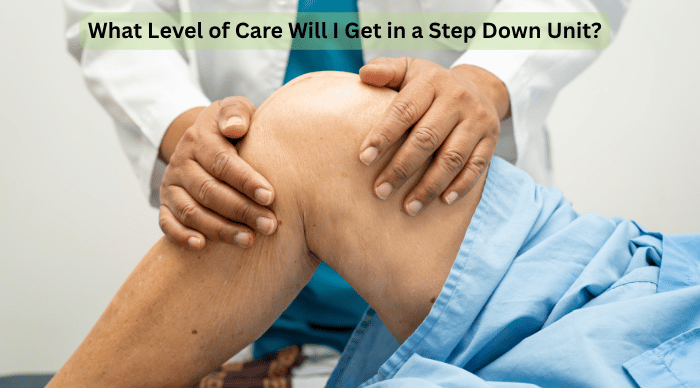
One of the first questions patients and families ask after hearing about a transfer from the Intensive Care Unit (ICU) is:
“Will I still receive the same level of care?”
It is an understandable question.
After days or even weeks of watching nurses constantly at the bedside, hearing monitors beep around the clock, and seeing specialists come and go throughout the day, moving to another unit can feel like losing a safety net. If you or your loved one are looking for step down facilities in Pretoria you can contact Greentree Sub Acute Hospital for all your needs
Throughout my career, I have learned that this fear comes from one simple misunderstanding.
People often mistake visible care for actual care.
If there is one lesson I hope every patient and family remembers, it is this:
The ICU keeps you from dying, but the Step Down Unit teaches you how to live again.
The Step Down Unit is not where advanced medical care ends. It is where advanced medical care becomes more focused on rebuilding your strength, independence, and confidence while maintaining an incredibly high level of clinical monitoring. Greentree Sub Acute Hospital is offers hip replacement rehab at their facility
What Is the Level of Care in a Step Down Unit?
A Step Down Unit (SDU), sometimes called an Intermediate Care Unit or High Care Unit, provides a level of care that sits between the ICU and a standard hospital ward.
Patients no longer require life-sustaining machines or one-to-one intensive care, but they still need:
- Continuous monitoring.
- Frequent nursing assessments.
- Complex medications.
- Specialist rehabilitation.
- Rapid access to emergency interventions.
Rather than reducing care, the Step Down Unit changes the focus.
The goal is no longer simply keeping the patient alive.
The goal becomes helping them recover safely.
Read our latest blog: What Happens in a Step Down Unit A Patient’s Guide
A Day in the Life of a Step Down Unit Patient
To understand what this level of care actually feels like, let me introduce you to Sarah.
Sarah was a 58-year-old woman recovering from major abdominal surgery.
After several days in the ICU, she was transferred to the Step Down Unit.
Like many patients, she felt relieved to leave intensive care but immediately wondered whether anyone would still be watching her.
The answer became obvious within minutes.
07:00 AM – Arrival and Handover
When Sarah arrived, her ICU nurse completed a comprehensive bedside handover with David, her Step Down Unit nurse.
David wasn’t caring for six or seven patients like a nurse on a general ward.
He was responsible for only three patients, allowing him to provide highly focused care throughout the day.
Before doing anything else, David completed a full physical assessment.
He checked:
- Her surgical incision.
- Her muscle strength.
- Her IV lines.
- Her pain level.
- Her neurological status.
- Her circulation.
Continuous Monitoring Never Stops
Many patients assume the monitors disappear after leaving the ICU.
They don’t.
Sarah remained connected to:
- Continuous wireless heart rhythm monitoring (telemetry).
- A continuous pulse oximeter measuring oxygen saturation.
- An automated blood pressure monitor checking her readings every two hours.
The difference was that the equipment became smaller and allowed her greater freedom to move around.
How Often Do Nurses Check on You?
One of the biggest surprises for Sarah was discovering she was never left alone for very long.
Throughout the day:
- David or a nursing assistant entered her room at least every hour.
- Every two hours her vital signs and pain levels were reassessed.
- Every two hours she was repositioned to protect her skin.
- Every four hours her surgical drains, bowel sounds and lung sounds were reassessed.
- If she pressed the call bell, a nurse responded within minutes because the nursing station was located directly outside the patient rooms.
This wasn’t less care.
It was highly targeted care.
Your Care Team Continues to Grow
One misconception is that patients only see specialists while in the ICU.
The opposite is often true.
During Sarah’s first morning in the Step Down Unit, she was visited by:
- The surgical hospitalist.
- A respiratory therapist.
- A clinical pharmacist.
- Physical therapists.
- Occupational therapists.
Each member of the team had one goal.
Help Sarah recover enough to return home safely.
Treatment Doesn’t Stop
Although many ICU machines had disappeared, Sarah still required complex medical treatment.
Throughout the day she received:
- Intravenous pain medication.
- Scheduled oral pain medication.
- Daily blood thinner injections.
- Timed intravenous antibiotics.
- Sterile wound care and dressing changes.
The treatment remained advanced.
It was simply becoming more focused on healing instead of survival.
Recovery Becomes Active
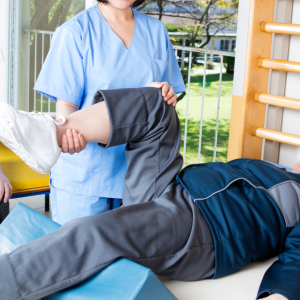
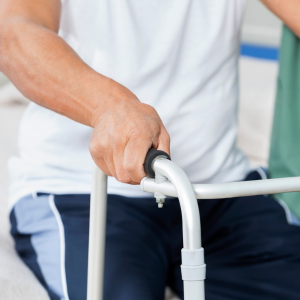
At 3:30 that afternoon, Sarah met her Physical Therapist and Occupational Therapist.
Together they helped her:
- Sit on the edge of the bed.
- Stand safely.
- Walk ten slow steps.
- Sit in a bedside chair.
To Sarah, it felt exhausting.
To her healthcare team, it was one of the most important treatments she would receive all day.
Early movement reduces:
- Blood clots.
- Pneumonia.
- Muscle wasting.
- Digestive complications.
It also speeds up recovery significantly.

The Biggest Misconception About Step Down Units
If I could eliminate one misunderstanding forever, it would be this:
“They’re moving me because they need my ICU bed.”
I hear this concern repeatedly.
Patients feel they are being pushed out.
Families worry their loved one is no longer important.
Nothing could be further from the truth.
It’s a Clinical Promotion, Not an Eviction
Patients are transferred because they have reached an important milestone.
Their organs no longer require constant mechanical support.
They no longer need minute-by-minute ICU intervention.
That is something worth celebrating.
The invisible safety net remains firmly in place.
- Nurses continue caring for only a small number of patients.
- Continuous telemetry keeps watching every heartbeat.
- Emergency protocols remain active.
- Rapid Response Teams remain immediately available.
You are not being watched less.
You are simply being watched differently.
The Hidden Safety Net Most Families Never See
One patient, Marcus, demonstrated this perfectly.
Marcus was recovering from complex cardiac surgery.
He was sitting comfortably in bed eating lunch with his daughter.
To everyone in the room, he looked perfectly healthy.
But the nurses saw something the family couldn’t.
The Monitor Detected the Problem First
At exactly 12:42 PM, Marcus’s telemetry monitor detected an abnormal heart rhythm.
His heart rate quietly climbed from 75 to 135 beats per minute.
He felt absolutely nothing.
Without continuous monitoring, this dangerous rhythm could easily have remained unnoticed for hours.
The Response Was Immediate
Within 45 seconds, his nurse Elena was standing at his bedside.
Within three minutes:
- An ECG had been ordered.
- Blood tests had been drawn.
- The advanced practice provider had assessed Marcus.
Within minutes, Marcus was receiving an intravenous heart medication to restore a safe rhythm.
By 1:15 PM his heart rate had returned to normal.
His daughter looked at Elena and said:
“I didn’t realize you were watching him that closely when you weren’t even in the room.”
That sentence perfectly captures what makes a Step Down Unit different.
Four Things Step Down Units Can Do That Surprise Most Families
1. Manage High-Risk IV Heart Medications
Many Step Down Units safely administer and adjust powerful intravenous medications used to control dangerous heart rhythms and blood pressure.
Most families assume these treatments only happen in the ICU.
In reality, specially trained Step Down nurses safely manage these medications every day.
2. Activate Emergency Protocols Immediately
Experienced Step Down nurses don’t always wait for doctors before beginning emergency care.
Standing protocols allow them to:
- Order ECGs.
- Draw emergency blood tests.
- Begin urgent treatments.
- Activate Rapid Response Teams.
Those precious minutes often prevent patients from deteriorating.
3. Deliver Aggressive Rehabilitation
Families are often shocked when therapists encourage patients to stand or walk so soon after critical illness.
Movement is medicine.
Even while connected to monitors, patients begin rebuilding strength under close supervision.
That early mobilisation often shortens recovery by days or even weeks.
4. Provide Advanced Respiratory Support
Many Step Down Units safely care for patients using:
- High-flow nasal oxygen.
- BiPAP.
- CPAP.
These advanced breathing therapies provide intensive respiratory support without requiring a return to mechanical ventilation.
The Biggest Lesson I Have Learned
If someone remembers only one thing from this article, I hope it is this:
The ICU keeps you from dying, but the Step Down Unit teaches you how to live again.
Throughout my career, I have realised that patients often associate excellent care with machines, alarms and constant physical presence.
But healing is about far more than technology.
In the ICU, machines breathe for you.
Medications control your blood pressure.
Nurses perform many of the tasks your body cannot yet manage.
The Step Down Unit changes that relationship.
The invisible safety net remains fully active.
Your heart is still being monitored.
Your oxygen is still being tracked.
Your nurses are still watching every trend.
But they intentionally step back just enough to allow you to step forward.
Recovery becomes active instead of passive.
Success is no longer measured by the number of machines connected to your body.
It is measured by:
- Your first walk to the chair.
- Your first independent meal.
- Your first shower.
- Your first uninterrupted night’s sleep.
- Your growing confidence that you can go home.
Final Thoughts
The Step Down Unit is one of the most misunderstood areas of any hospital.
Patients often fear they are losing care when, in reality, they are gaining something even more valuable.
They are gaining the opportunity to recover.
You are not being downgraded.
You are not being forgotten.
You are not leaving the safety net behind.
You are entering the phase where every member of your healthcare team is focused on one goal: helping you safely transition from surviving your illness to living your life again.
That is why I believe the Step Down Unit is not simply a place between the ICU and home.
It is the bridge where medicine gradually hands control back to the person who matters most.
You.