
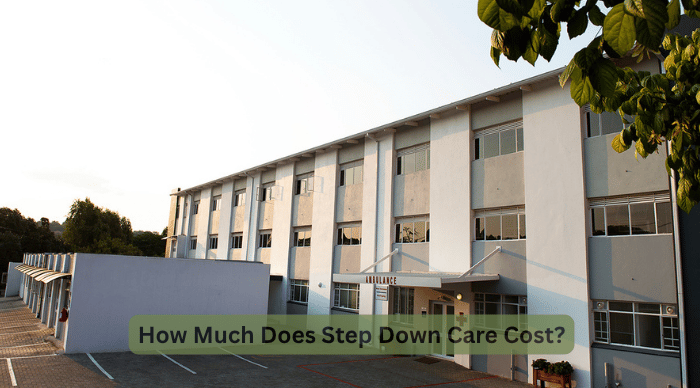
At Greentree Sub Acute Hospital in Pretoria, the published private rate is R2,530 per night. For patients using medical aid, scheme-specific tariffs apply, and admission requires clinical assessment and medical aid authorisation.
However, the nightly rate is only the starting point when budgeting for recovery. Your total cost depends on how long you stay, the treatment you need, separately billed services and what your medical scheme agrees to cover.
Our advice to families is simple: never assume that a nightly rate includes every service, or that an authorisation number means every expense is covered. Ask for a written breakdown before admission and keep discussing costs as recovery progresses.
What Does the Private Nightly Rate Include?
The base private rate covers accommodation, standard patient meals, baseline 24-hour nursing care and the facility infrastructure that supports your recovery.
This provides a supported environment for patients who need continued care after hospital discharge. Nursing support can include assistance with daily activities, routine monitoring and medication administration according to the patient’s care plan.
Before accepting a quotation, ask the admissions team to confirm the current tariff and its exact inclusions. In particular, do not assume that access to an on-call doctor means every consultation or medical service is included in the accommodation fee.
What Can Be Charged Separately?
Your treatment needs may result in additional accounts. Depending on your care plan and funding arrangements, these can include:
- Physiotherapy, occupational therapy and speech therapy.
- Psychology and dietician services.
- Doctor consultations and other professional fees.
- Medication and intravenous treatment.
- Specialised wound dressings and clinical consumables.
- Blood tests, imaging and other diagnostic services.
- Ambulance transfers and transport.
Ask each treating practitioner for their fees and billing arrangements. Confirm whether they submit claims to your medical scheme and whether you remain responsible for any shortfall.
How Much Would a Week or Two Weeks Cost?
Using the published private rate of R2,530 per night, the accommodation and base care calculation is:
- 7 nights: R17,710.
- 14 nights: R35,420.
- 21 nights: R53,130.
- 30 nights: R75,900.
These figures exclude separately billed treatment and services. They are calculations based on the nightly tariff, rather than complete quotations or recommended lengths of stay.
A 14-night budget, for example, does not mean every patient needs two weeks of rehabilitation. The treating team assesses the patient’s needs and reviews progress throughout the admission.
Read our latest blog: How Do Doctors Decide If You’re Ready for Step Down?
An Illustrative Rehabilitation Budget
To understand how additional costs affect the total, consider a hypothetical patient recovering from a stroke. For budgeting purposes only, imagine the following weekly treatment schedule:
- Five physiotherapy sessions at an illustrative R650 each: R3,250.
- Three occupational therapy sessions at an illustrative R650 each: R1,950.
- Two speech therapy sessions at an illustrative R650 each: R1,300.
- An illustrative medication and consumables allowance: R1,500.
In this example, the additional weekly allowance is R8,000. Added to seven nights at R17,710, the estimated weekly total would be R25,710. Over two weeks, the same assumptions would produce an estimate of R51,420.
These therapy prices, session frequencies and allowances are examples, not Greentree quotations or prescribed treatment schedules. Your actual costs may be lower or higher. Obtain individual estimates from the treating professionals before using these figures to plan your finances.
Does Medical Aid Cover Step Down Care?
Medical aid can fund eligible step down care, subject to your scheme’s rules, available benefits and clinical authorisation. At Greentree, the admission process involves a referral and doctor’s motivation, an assessment of whether the facility can accommodate the patient, and liaison with the medical scheme to obtain authorisation.
The important question is not simply, “Has admission been approved?” It is, “Exactly what has been approved, for which dates, and at what payment rate?”
Authorisation Does Not Automatically Mean Full Payment
An authorisation may have conditions, approved dates, benefit limits or exclusions. Professional accounts may also be assessed separately from the facility account.
Before admission, ask your scheme and the case management team:
- Which admission dates and services are authorised?
- Does my plan have a co-payment or rehabilitation benefit limit?
- Will the facility tariff be paid in full?
- Are therapy sessions covered, and are separate authorisations needed?
- Do the treating practitioners charge within my scheme’s payment rate?
- How are medication, wound dressings and other consumables funded?
- What information is needed if further days are requested?
Request written confirmation where possible. A verbal assurance can leave important details unclear.


What Happens If Funding Ends Before the Patient Leaves?
Further funding can depend on updated clinical information and the medical scheme’s assessment. A recommended recovery period and an authorised period are not necessarily the same.
Consider this hypothetical example: a patient enters rehabilitation after a hip replacement. The family expects a three-week stay, but the scheme approves a shorter period. After reviewing progress, the scheme declines an extension because it considers care at home appropriate.
If the family requests additional private nights, those nights and any separately billed services may become their responsibility. Seven additional nights at R2,530 would add R17,710 before other treatment costs.
This example is an educational scenario, not an account of a specific Greentree patient. It shows why families should track approved dates and discuss possible funding changes before the authorisation expires.
How Can You Budget When the Length of Stay Is Uncertain?
We recommend working with a weekly forecast. A weekly estimate makes the likely expenses easier to understand and gives you a useful basis for discussing changes.
Build Your Budget Around Four Questions
- What is the estimated number of nights, based on the current clinical assessment?
- Which treatments are planned, and what do the practitioners charge?
- What has the medical scheme confirmed it will pay?
- What could become payable privately if the stay or treatment plan changes?
Allow for uncertainty, but do not mistake a contingency allowance for a guaranteed maximum bill. Complications, additional investigations or changing care needs can alter the estimate.
Agree on How You Will Receive Updates
Ask the administration and case management teams how you can obtain interim account information, check remaining approved days and receive updates about extension requests.
You can also request that the relevant team explain the likely financial effect of a proposed change in treatment. These are sensible arrangements to discuss, rather than assumptions about a fixed notification schedule.
Choose one family contact to coordinate these conversations. This helps prevent conflicting messages and makes it easier to keep records of approvals and quotations.
Is Home Care Cheaper Than Step Down Care?
Home care may cost less when the patient can recover safely with a suitable level of support. For someone with more complex needs, the comparison requires more than a caregiver’s salary.
Families should compare the complete care plan in each setting. A caregiver, a registered nurse and a rehabilitation therapist perform different roles and may charge separately.
Home Care Costs Families Can Overlook
- Daytime, overnight and weekend cover, including relief staff.
- Equipment hire, such as an appropriate bed, wheelchair or pressure-relieving mattress.
- Home therapy visits or transport to appointments.
- Medication, dressings and other consumables.
- Home adaptations and bathroom access.
- Time away from work for relatives providing care.
- Backup arrangements if the usual carer is unavailable.
Not every patient needs every item on this list. Ask the treating team what is necessary for your family member, then obtain written home care quotations for those needs.
Compare Safety and Support Alongside Price
For a hypothetical patient recovering from a severe stroke, a daytime caregiver alone may leave significant gaps if the patient also needs help overnight, assistance with transfers or skilled nursing procedures.
Before choosing home care, discuss who will provide each part of the care plan, whether they have the appropriate training, and what happens if the patient’s condition changes.
The aim is to find a suitable, affordable arrangement that supports recovery. Home care and step down care should be compared according to the individual patient’s assessed needs.
How Can Families Manage Costs Without Disrupting Recovery?
Start financial discussions early and include discharge planning from the beginning. Ask the treating team what the patient needs to achieve before returning home and what support should be arranged.
- Request an itemised estimate before admission.
- Confirm medical aid benefits and approved dates in writing.
- Obtain separate practitioner fee estimates.
- Keep copies of authorisations, quotations and account updates.
- Discuss funding concerns as soon as they arise.
- Prepare equipment and home support ahead of discharge.
Do not reduce prescribed treatment or arrange an early discharge solely on the basis of a rough cost comparison. Explain your budget constraints so the team can discuss clinically appropriate options with you.
Request a Personalised Step Down Care Estimate at Greentree
The most useful answer to “How much does step down care cost?” is a written estimate based on the patient’s condition, expected stay, treatment needs and funding arrangements.
Greentree Sub Acute Hospital is situated at 44 Charles Bramley Street, Baileys Muckleneuk, Groenkloof, Pretoria. Contact the admissions team on 010 823 1630 or email reception@greentreehealth.co.za to confirm the current private tariff and discuss the admission process.
Our strongest advice is to ask questions before admission and keep asking throughout recovery. Understanding the likely costs early gives your family more time to prepare for both the stay and a safe return home.